


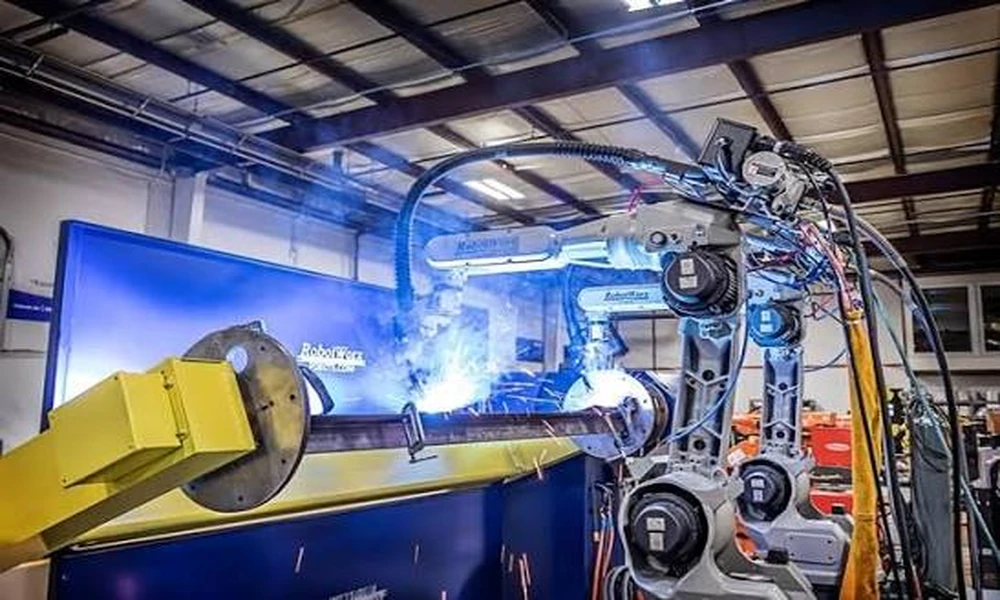
Window manufacturing presents an unusual automation challenge because the same production line must handle materials with very different physical properties. Glass panes are fragile and sensitive to concentrated pressure, while aluminum and PVC frames require secure positioning during assembly. Seals, spacers, and hardware introduce additional complexity because they are smaller, more flexible, and often difficult to orient consistently. Industrial robots can automate many of these operations, but successful implementation depends heavily on selecting suitable handling equipment and integrating it with existing manufacturing processes.
Unlike industries where products have relatively uniform shapes, window production involves frequent variations in dimensions, weight, and component configurations. A single factory may manufacture standard residential windows, large architectural glazing units, and customized frames within the same production environment. These differences complicate automation because equipment must accommodate changing geometries without sacrificing accuracy or damaging materials.
Glass handling is particularly demanding because the material combines substantial weight with vulnerability to edge damage and surface contamination. Even minor contact with an unsuitable gripping surface can introduce scratches or defects that become visible after installation. Robots handling glass must therefore control acceleration, gripping force, and positioning throughout the movement.
Frame assembly creates a different set of requirements. Profiles must be aligned accurately before joining, and their surfaces must remain protected from mechanical damage. Automated systems also need to account for dimensional tolerances, particularly when handling long profiles that may flex slightly during transportation.
How Robots Move Glass Without Damaging It
Vacuum gripping is among the most established technologies for handling flat glass panels. Instead of applying concentrated mechanical pressure to the edges, vacuum cups distribute the holding force across designated contact areas. This approach can provide stable lifting and positioning when the suction system is correctly designed for the glass dimensions, surface condition, and operating environment.
However, vacuum handling is not automatically suitable for every glazing application. Textured surfaces, protective coatings, contamination, and unusual panel geometries can affect sealing performance. Engineers must also consider acceleration forces and the consequences of losing vacuum during operation.
Larger glass panels may require multiple suction points mounted on adjustable gripping frames. These systems help distribute loads and reduce excessive bending during transportation. Vacuum monitoring, appropriate safety measures, and carefully controlled robot trajectories are essential, especially when handling expensive insulated glazing units.
Robotic motion planning contributes directly to product quality. Abrupt acceleration can generate forces that exceed the capabilities of an otherwise adequate gripper, while poor approach angles increase the risk of contact with surrounding equipment. Smooth trajectories and reliable positioning are therefore just as important as the gripping technology itself.
Automating Frame Assembly and Component Placement
Window frames introduce opportunities for robotic automation beyond straightforward material transportation. Robots can transfer cut profiles between processing stations, position components for assembly, and assist with loading automated joining equipment. In suitable production environments, these operations reduce repetitive manual handling and improve consistency between production cycles.
Mechanical grippers are frequently more appropriate for frame profiles than vacuum systems. Their fingers can engage defined surfaces or profile features, providing controlled holding forces during movement. However, contact points must be selected carefully to avoid deforming thin-walled profiles or damaging decorative finishes.
The choice of end-of-arm tooling becomes especially important when manufacturers want one robotic cell to handle several components. Different grippers may be required for glass, metal profiles, and flexible seals, making tool-changing systems an attractive option. Manufacturers evaluating gripping systems, force control, and compatible automation components can learn more about the available technologies before selecting equipment for a particular application.
Flexible components present additional difficulties. Rubber seals can stretch, twist, or change shape when lifted, making repeatable insertion challenging. Automated seal installation may require dedicated feeding mechanisms, controlled tension, and specialized insertion tools rather than conventional robotic gripping alone.
Where Vision Systems Improve Manufacturing Accuracy
Machine vision can help robotic systems recognize component positions and compensate for variation in incoming materials. Cameras may identify frame orientation, locate reference features, or determine whether a component has been placed correctly before the next operation begins. This is particularly useful when components arrive with small positional differences that would otherwise require manual correction.
Vision-guided automation can also support quality inspection, although inspection requirements vary significantly between manufacturing stages. A camera system might verify the presence of hardware, check alignment, or identify certain visible surface defects. Detecting subtle glass scratches, coating imperfections, or internal glazing defects may require specialized illumination and inspection equipment.
Lighting conditions are a major consideration when inspecting transparent and reflective materials. Glass can produce reflections that interfere with conventional image processing, while dark or glossy frame finishes may reduce contrast. Reliable inspection therefore depends on carefully designed lighting, camera placement, and validation using representative production samples.
Balancing Automation Costs With Production Flexibility
The economic case for robotic window manufacturing depends on more than labor savings. Manufacturers must consider production volumes, product variation, available floor space, integration costs, and the frequency of changeovers. A system designed for continuous production of standardized windows may perform poorly in a workshop producing highly customized orders.
Cycle-time analysis should account for the entire manufacturing process rather than robot movement alone. A fast robot offers limited benefits if upstream equipment cannot supply components consistently or downstream stations create bottlenecks. Similarly, frequent manual adjustments can undermine the expected productivity improvements.
Maintenance and workforce training also influence long-term performance. Vacuum cups require inspection, grippers need appropriate maintenance, and sensors must remain calibrated. Operators should understand how to respond to misaligned components, failed gripping attempts, and unexpected production interruptions without compromising safety.
For manufacturers with diverse product portfolios, modular automation may offer a practical starting point. Automating glass loading or repetitive frame transfers can deliver measurable operational improvements without requiring a complete production-line redesign. Additional processes can then be automated as production data demonstrates where further investment would be justified.
Designing Automation Around Product Quality
The greatest value of robotic window manufacturing may come from reducing variability in handling and assembly rather than simply increasing production speed. Consistent positioning can improve downstream process reliability, while controlled gripping reduces unnecessary mechanical stress on delicate components. These benefits become especially important as manufacturers work with larger glazing units and more demanding architectural specifications.
Nevertheless, automation cannot compensate for inconsistent incoming materials or poorly designed production processes. Reliable results require suitable tooling, stable component presentation, appropriate safety engineering, and continuous monitoring of manufacturing quality. The most effective robotic installations are therefore developed around the physical requirements of the window itself, rather than forcing every component into a standardized handling method.
